

Cow in the City
Cow in City lX
₹1,20,000
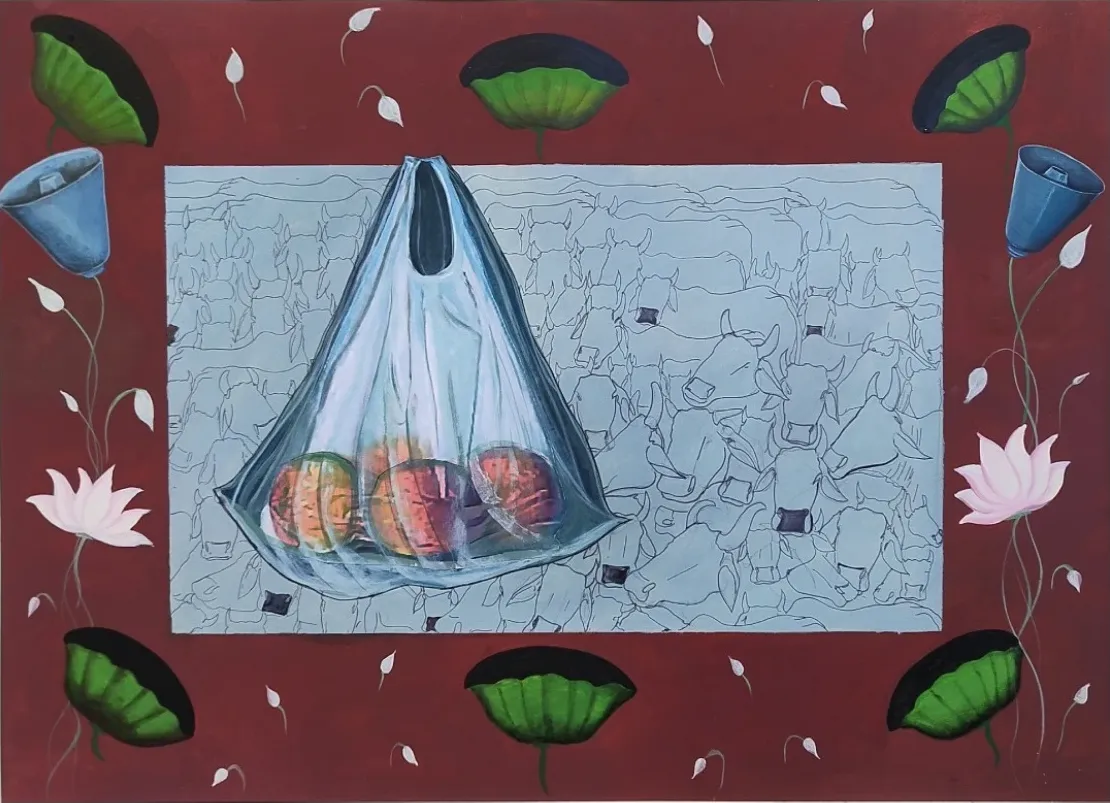
This contemporary Nathdwara-style painting juxtaposes the sacred symbol of the cow with a plastic shopping bag filled with fruit, suspended over a crowd of sketched cow heads. It presents a haunting commentary on commodification, consumerism, and the silent suffering of animals in modern society.
Interested in this piece?
Chat on WhatsAppOr reach us directly at +91 79824 33408
Home visit available
Select artworks can be viewed at your home before you decide. A visit is ₹1,000 per artwork, fully adjusted against the purchase if you go ahead. See how it works.
Ask about a home visit for this pieceOr leave us a question about this piece
- Category
- Painting
- Subcategory
- Acrylic on paper
- Year
- 2024
- Dimensions
- 22 × 30 in
- Place
- Delhi
- Certificate no.
- MS-COW-Nathdwarpainting-lX-2024
Color palette
- Red (43%)
- Teal (34%)
- Gray (8%)
- White (6%)
- Green (3%)
- Black (2%)
- Blue (2%)
- Pink (1%)
Exact tones detected
Dark RedDark RedTealTealTeal
Description
This artwork powerfully blends traditional Nathdwara aesthetics with a stark modern visual language to highlight the disturbing contradiction between reverence and exploitation. The central element of the painting—a plastic bag filled with fruit—hangs over a background densely filled with sketched outlines of cow heads. These cows appear tagged and confined, evoking imagery of slaughterhouses or mass commodification.
The plastic bag, a modern symbol of consumer convenience and environmental degradation, now becomes a vessel that paradoxically cradles life (the fruits) while visually hovering over voiceless animal figures. The viewer is drawn into a surreal space where the everyday object becomes a metaphor for burden, containment, and selective compassion.
Surrounding this central composition is a richly decorated border typical of Nathdwara miniature traditions. Lotus pods and flowers—symbols of purity and spirituality—float freely, contrasting sharply with the confinement of the cows in the background. This border, with its rhythmic and idealized floral motifs, acts as a reminder of the traditional Indian reverence for nature and animals, particularly the cow, which is considered sacred.
The sharp disconnect between this outer spiritual realm and the central image of mass anonymity and commodification becomes the heart of the painting's message. It asks: What happens when a sacred animal becomes a silent product?
🔹 Technique Highlight
- Style: Nathdwara miniature influence with contemporary conceptual framing
- Medium: Acrylic or oil on canvas (assumed from texture)
- Methods:
- Fine line sketching for background cow heads to create a sense of uniformity and crowding
- Detailed and realistic rendering of the plastic bag and fruit, creating a hyperreal effect
- Traditional miniature motifs (lotus, foliage) for border elements, delicately painted with controlled brushwork
🔹 Historical Context
The Nathdwara painting style emerged in the 17th century in Rajasthan, primarily centered around the worship of Shrinathji (a form of Krishna). Cows have always been central to this devotional art form—appearing as Krishna’s companions or as divine beings in their own right.
In modern India, however, cows occupy a contradictory position. While they are legally protected and religiously revered, they are also frequently found suffering in urban environments or illicit slaughter industries. This painting draws on this tension—using historical references to expose a current moral crisis.
🔹 Color Analysis
- Central Background (light blue/grey): Evokes coldness, monotony, and lifelessness, underscoring the depersonalization of the cows.
- Plastic Bag (pale blue with colorful fruit): Contrasts subtly, creating focus; the fruits symbolize life and consumption.
- Outer Border (deep maroon): Rich and regal, echoing temple wall colors, signifying tradition, devotion, and solemnity.
- Lotus Elements (green, black, white, and pink): Maintain a delicate and spiritual tone, reinforcing sacred symbolism.
🔹 Symbolism
- Plastic Bag: Symbol of modern consumer culture; here, it suggests how life (or the sacred) is packaged, handled, and consumed.
- Fruit inside the bag: Suggests fertility, life, and consumption—but also commodification.
- Sketched Cow Heads: Represent anonymity, voicelessness, crowding, and systematic exploitation.
- Lotuses and Pods: Traditional symbols of purity, detachment, and divine beauty; here, they also symbolize a fading connection with spiritual responsibility.
- Red Background: Associated with ritual, sacrifice, and urgency—perhaps signaling blood or warning.
Technique
The artwork draws stylistic inspiration from Nathdwara miniature painting, blending its traditional intricacy with a contemporary conceptual framing that challenges cultural and social norms. The medium, likely acrylic or oil on canvas based on the visible texture and layering, supports both fine detail and painterly depth. The artist employs fine line sketching to depict background cow heads, creating a sense of uniformity, repetition, and crowding—reflecting anonymity and systemic neglect. In contrast, the plastic bag and fruit are rendered with meticulous realism, almost hyperreal in effect, to sharply highlight the unnatural intrusion of modern waste and artificiality into the sacred space. Traditional miniature motifs, such as lotus flowers and stylized foliage, are used as border elements and painted with precision and delicacy, maintaining the aesthetic balance while emphasizing the tension between devotion and disregard.
Historical context
The Nathdwara painting style emerged in the 17th century in Rajasthan, primarily centered around the worship of Shrinathji (a form of Krishna). Cows have always been central to this devotional art form—appearing as Krishna’s companions or as divine beings in their own right. In modern India, however, cows occupy a contradictory position. While they are legally protected and religiously revered, they are also frequently found suffering in urban environments or illicit slaughter industries. This painting draws on this tension—using historical references to expose a current moral crisis.
Symbolism
The style of the artwork uses powerful symbols to comment on modern culture and the degradation of sacred values. The plastic bag acts as a stark symbol of modern consumerism, suggesting how life—or the sacred—is packaged, handled, and commodified in today’s world. Inside the bag, the fruit represents fertility and life, but it also speaks to the commodification of nature and the process of consumption. The sketched cow heads evoke anonymity and voicelessness, representing the crowding and systematic exploitation of animals within a mechanized system. The lotuses and pods, traditionally symbols of purity and divine beauty, now serve as reminders of the fading connection to spiritual responsibility, representing a detachment from the sacred. Finally, the red background brings urgency to the piece, evoking associations with ritual and sacrifice, and perhaps even signaling blood or a warning of the impending consequences of neglecting our spiritual and ethical duties.
Composition analysis
The painting is divided into two contrasting planes: the central panel where modern imagery dominates, and the outer frame, which follows Nathdwara-style symmetrical arrangements. The central hanging bag acts as a literal and symbolic weight over the cows—drawing the viewer’s eye immediately to the dual meanings of burden and consumer choice. The repetition of cow heads creates visual tension and claustrophobia, while the sparse but balanced placement of lotuses around the border adds rhythm and calm—emphasizing the disconnect between spiritual ideal and societal practice.
Cultural significance
This painting critiques the cultural paradox in contemporary India where animals, particularly cows, are venerated in mythology and religious rituals, yet neglected and mistreated in reality. It challenges the selective sanctity afforded to animals—where reverence exists only in rhetoric or temple spaces, while in urban society, these creatures become invisible or burdensome. By employing the Nathdwara visual language—traditionally used to elevate the divine—the artist forces viewers to confront how that divine symbolism is betrayed in modern times. The artwork invites a re-evaluation of compassion, suggesting that genuine reverence must translate into ethical action, not just symbolic gestures.
Catalogued May 5, 2025
From the same artist
More by Madhusudhan Sharma


Keep exploring
Related artworks


