

Roots of Sacrifices
by Madhusudhan Sharma
₹1,20,000
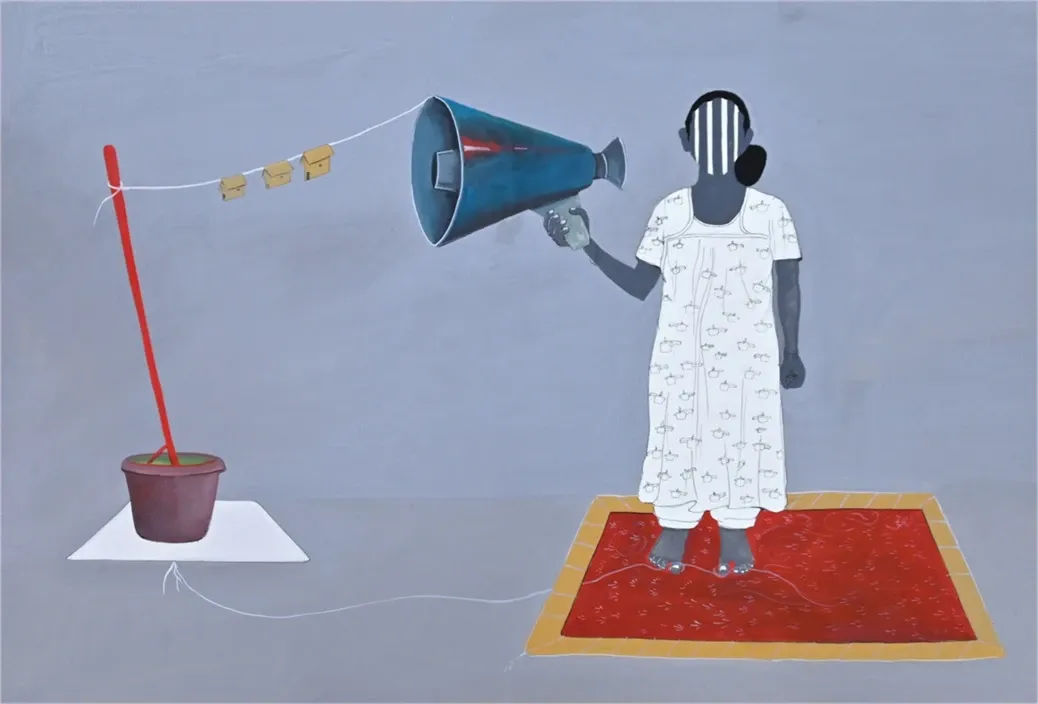
Roots of Sacrifice is a surrealist tribute to the artist’s mother, portraying a faceless female figure holding a megaphone, surrounded by domestic symbols that reflect themes of silent strength, emotional resilience, and the often-unseen labor within the household. The work honors her living presence and enduring impact.
Interested in this piece?
Chat on WhatsAppOr reach us directly at +91 79824 33408
Home visit available
Select artworks can be viewed at your home before you decide. A visit is ₹1,000 per artwork, fully adjusted against the purchase if you go ahead. See how it works.
Ask about a home visit for this pieceOr leave us a question about this piece
- Category
- Painting
- Subcategory
- water color, Goush
- Year
- 2024
- Dimensions
- 22 × 30 in
- Place
- Delhi
- Certificate no.
- MS-Roots of Sacrifices-2024
Color palette
- Teal (53%)
- Gray (21%)
- White (14%)
- Red (6%)
- Other (3%)
- Blue (3%)
Exact tones detected
TealTealLight GrayWhiteDark Red
Description
Roots of Sacrifice is a deeply evocative surrealist painting dedicated to the artist's mother—an homage to her enduring strength, love, and silent resilience. The artwork features a faceless female figure standing barefoot on a vibrant red carpet, holding a large megaphone. Her identity is intentionally obscured, symbolizing the countless mothers whose voices go unheard despite carrying the emotional weight of families and homes.
In this poignant imagery, the muted grey-blue background sets a tone of emotional restraint and quiet melancholy, encapsulating the complex, often unspoken feelings tied to motherhood. Against this subdued backdrop, the red carpet stands out—bold and symbolic—a visual metaphor for dignity, sacrifice, and the invisible wounds carried by mothers throughout their lives.
The figure wears a white nightdress printed with repeated pressure cooker motifs. This subtle yet powerful detail transforms a domestic object into a symbol of mental and emotional pressure. The pressure cooker, often associated with nurturing through food, here becomes a metaphor for the accumulated stress and expectations placed upon mothers in their everyday roles. Drawn onto the fabric itself, it suggests how this burden becomes embedded into their identity, quietly carried without acknowledgment.
The facelessness of the woman allows her to transcend individuality, transforming her into a universal representation of motherhood—she could be anyone’s mother. Her dark skin emphasizes strength and rootedness, while her stillness speaks volumes about perseverance.
A flower pot with a red stick and a taut string connected to miniature hanging houses extends from the left, symbolizing the physical and emotional labor that maintains domestic balance. These grounded, earthy tones reflect resilience and deep familial roots—growth that persists even under tension.
Overall, Roots of Sacrifice weaves a surreal yet intimately grounded narrative about the weight of domestic responsibility, the quiet endurance of mothers, and the emotional complexity that lies beneath acts of everyday care.
Technique Highlight
This artwork employs surrealist visual strategies, such as disproportionate symbolism and unexpected juxtapositions, to express psychological tension. The detailed rendering of objects like the megaphone, pressure cooker, and carpet contrasts with the flattened background, drawing the viewer's focus to the symbolic narrative.
Historical Context
Surrealism, which emerged in the early 20th century, aimed to explore the unconscious mind through dreamlike imagery. This artwork continues that tradition, using domestic symbols to critique and reveal the mental burdens and societal roles imposed on women—especially mothers—within contemporary settings.
Color Analysis
The dominant grey-blue background communicates emotional suppression and the heaviness of unspoken feelings. The red of the carpet symbolizes both sacrifice and life force. White in the dress conveys purity and routine, while earthy browns ground the composition in reality. These contrasts heighten the tension between internal experience and external perception.
Symbolism
- Faceless figure: Universal representation of motherhood, anonymity of domestic labor.
- Pressure cooker on the dress: Symbol of emotional and mental pressure tied to daily routine and expectations.
- Megaphone: A silent call for recognition; ironic symbol of unheard voices.
- Red carpet: Dignity, sacrifice, emotional struggle.
- Pot and stick with string: Tension, stability, deep-rooted resilience.
- Miniature houses: Domestic responsibilities and emotional tethering.
Technique
This artwork employs surrealist visual strategies, such as disproportionate symbolism and unexpected juxtapositions, to express psychological tension. The detailed rendering of objects like the megaphone, pressure cooker, and carpet contrasts with the flattened background, drawing the viewer's focus to the symbolic narrative.
Historical context
Surrealism, which emerged in the early 20th century, aimed to explore the unconscious mind through dreamlike imagery. This artwork continues that tradition, using domestic symbols to critique and reveal the mental burdens and societal roles imposed on women—especially mothers—within contemporary settings.
Symbolism
In this poignant imagery, the muted grey-blue background sets a tone of emotional restraint and quiet melancholy, encapsulating the complex feelings often associated with motherhood. Contrasting with this muted backdrop, the red carpet emerges as a bold emblem of dignity and sacrifice, highlighting the often-invisible emotional wounds endured by mothers. The white dress adorned with delicate prints speaks to innocence and routine, embodying the nurturing tenderness that is synonymous with maternal love. Yet, the dark skin tone and facelessness of the figure transcend individuality, presenting the universal essence of motherhood—she is every mother. Meanwhile, the earthy tones of the pot and stick serve as grounding elements, symbolizing deep roots, resilience, and the enduring growth that occurs even under constraints. Together, these elements weave a rich tapestry that captures the complexities of maternal experience—both celebrated and concealed.
Keep exploring
Related artworks


