
Other
Cow in City XIX
₹1,00,000
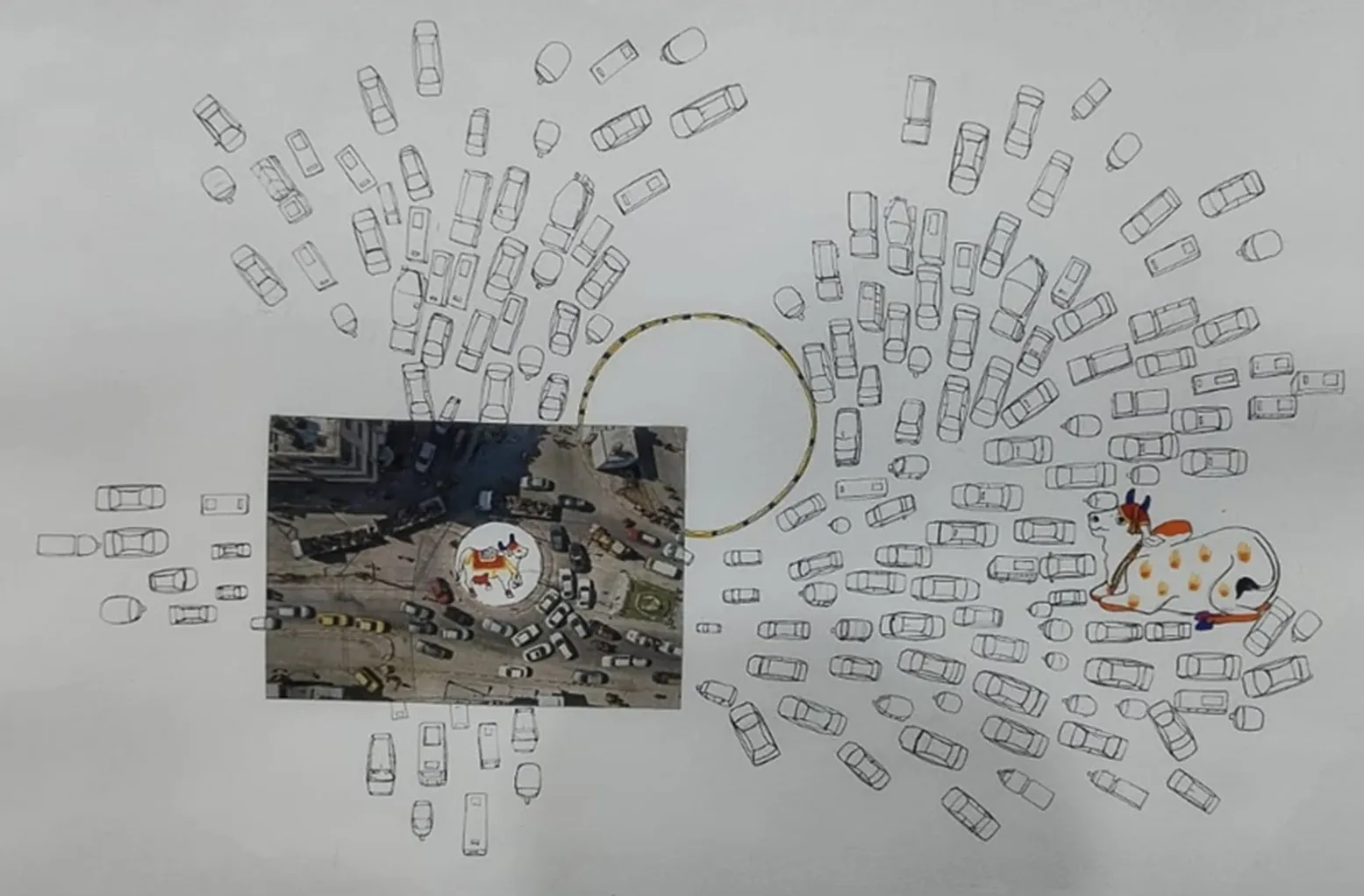
Cow in City is a mixed media artwork that captures the stark contrast between urban congestion and the quiet suffering of a sacred yet neglected animal. Through a combination of trafic and vehicle drawing linework and"Chaotic traffic merges with a bold paper-cut collage, creating a striking urban contrast."the artist highlights the invisibility of the cow amidst the overwhelming dominance of vehicles in an ever-expanding city.
Interested in this piece?
Chat on WhatsAppOr reach us directly at +91 79824 33408
Home visit available
Select artworks can be viewed at your home before you decide. A visit is ₹1,000 per artwork, fully adjusted against the purchase if you go ahead. See how it works.
Ask about a home visit for this pieceOr leave us a question about this piece
- Category
- Drawing
- Subcategory
- pan and paper cut pasting
- Year
- 2025
- Dimensions
- 22 × 30 in
- Place
- Delhi
- Certificate no.
- MS-Cow in City XIX-2025
Color palette
- Gray (92%)
- White (6%)
- Black (2%)
Exact tones detected
Light GrayLight GrayLight GrayLight GrayLight Gray
Description
Cow in City is a powerful conceptual and mixed media artwork that explores the dissonance between cultural reverence and urban neglect in contemporary Indian society. At the center of the composition is a real aerial drawing of a congested traffic roundabout, where a sacred cow image is painted on the road’s surface, ironically surrounded by honking vehicles in chaotic motion. This artwork is seamlessly embedded into a drawing composition where hundreds of outlined cars radiate outward, mimicking the flow and density of urban traffic patterns.
To the right of the piece, a pichwai style cow reclines with exaggerated features, appearing both decorative and helpless. This cow, a revered symbol in Indian culture, lies motionless, overwhelmed by the swarm of mechanical dominance around it. The circular format, formed by cars, echoes the layout of the city roundabout while also acting as a symbolic trap or vortex, emphasizing the suffocation of nature and sacred life amidst relentless urbanization.
The juxtaposition of drawing and paper cut collage blurs the line between reality and imagination, highlighting the fragmented coexistence of tradition and modernity. The piece critiques the loss of empathy in rapidly growing cities, where even culturally significant animals are reduced to obstacles or forgotten symbols in the face of relentless progress.
Technique Highlight
This mixed-media piece layers aerial city drawing with expressive pen-and-ink drawings, Chaotic traffic merges with a bold paper-cut collage, creating a striking urban contrast..merging detachment with dynamism. The bird’s-eye drawing —clinical and impersonal—is disrupted by swirling hand-drawn vehicles and animals, their inked lines pulsing with frenetic energy. Radial streaks of color explode from the center, transforming urban sprawl into a visual vortex of motion and conflict. Here, the collage and the drawing collide, mirroring the tension between Barren urban planning and the chaotic life it contains. The composition doesn’t just depict a city—it performs its contradictions.
Historical Context
This artwork is rooted in contemporary Indian urban experience, particularly in cities like Delhi, where stray animals—especially cows—are caught between cultural symbolism and neglect. Despite being sacred in Hindu tradition, cows are often left to roam the streets, scavenging through garbage and dodging traffic.
This tension reflects a broader post-colonial and globalized identity crisis, where rapid urban development collides with traditional values, producing social and ethical contradictions. The piece draws conceptual inspiration from Conceptual Art and Social Realism, and also connects with Postmodern urban critique through its mixed media approach and focus on lived reality.
Color Analysis
The artwork unfolds primarily in monochrome, its intricate black-and-white linework capturing the frenetic energy of urban traffic—a whirlwind of vehicles rendered in precise yet chaotic strokes. Against this grayscale tumult, the cow emerges in vivid bursts of color, its form saturated in sacred oranges, deep purples, and fiery reds—hues that echo Indian traditions of festivity, spirituality, and ritual sacrifice. This deliberate chromatic contrast elevates the cow from mere subject to symbol, a beacon of cultural weight amidst the mechanical storm. At the center, a small photographic fragment injects a jarring note of realism, its unedited hues grounding the surreal composition in tangible urgency. The result is a visual dialectic: the hand-drawn abstractions of chaos versus the photograph’s unflinching truth, the muted city versus the radiant animal.
Symbolism
The cow—simultaneously sacred and stranded—embodies India’s paradox: venerated as Gaumata (divine mother) yet abandoned in urban churn. Around it, a cyclone of vehicles spins, their mechanical roar drowning out both spirituality and ecology, reducing reverence to mere background static. This chaos organizes into a false chakra, its circular composition perverting the spiritual wheel into a trap—a relentless cycle of neglect disguised as progress. At the center, the photo-collage ruptures the scene with a fragment of documentary reality, forcing the viewer to confront the actual streets where symbolism and suffering collide. Here, every element exposes the hypocrisy of worship without guardianship, tradition without care.
Technique
This mixed-media piece layers aerial city drawing with expressive pen-and-ink drawings, Chaotic traffic merges with a bold paper-cut collage, creating a striking urban contrast.merging detachment with dynamism. The bird’s-eye drawing —clinical and impersonal—is disrupted by swirling hand-drawn vehicles and animals, their inked lines pulsing with frenetic energy. Radial streaks of color explode from the center, transforming urban sprawl into a visual vortex of motion and conflict. Here, the collage and the drawing collide, mirroring the tension between Barren urban planning and the chaotic life it contains. The composition doesn’t just depict a city—it performs its contradictions.
Historical context
This artwork is rooted in contemporary Indian urban experience, particularly in cities like Delhi, where stray animals—especially cows—are caught between cultural symbolism and neglect. Despite being sacred in Hindu tradition, cows are often left to roam the streets, scavenging through garbage and dodging traffic. This tension reflects a broader post-colonial and globalized identity crisis, where rapid urban development collides with traditional values, producing social and ethical contradictions. The piece draws conceptual inspiration from Conceptual Art and Social Realism, and also connects with Postmodern urban critique through its mixed media approach and focus on lived reality.
Symbolism
The cow—simultaneously sacred and stranded—embodies India’s paradox: venerated as Gaumata (divine mother) yet abandoned in urban churn. Around it, a cyclone of vehicles spins, their mechanical roar drowning out both spirituality and ecology, reducing reverence to mere background static. This chaos organizes into a false chakra, its circular composition perverting the spiritual wheel into a trap—a relentless cycle of neglect disguised as progress. At the center, the photo-collage ruptures the scene with a fragment of documentary reality, forcing the viewer to confront the actual streets where symbolism and suffering collide. Here, every element exposes the hypocrisy of worship without guardianship, tradition without care.
Catalogued May 19, 2025
From the same artist
More by Madhusudhan Sharma


Keep exploring